The Ultimate Setup Guide for Your Nvidia Geforce Rtx 5070 Ti
Introduction
The Nvidia GeForce RTX 5070 Ti has become a focal point for laptop buyers who want a balance between high-end gaming performance and practical portability. Positioned for gamers, creators, and power users who need strong rasterization, respectable ray-tracing, and modern AI-enhanced features, the 5070 Ti aims to deliver a versatile experience on thin-and-light to mid-thickness gaming notebooks. This guide walks through what the 5070 Ti offers in the laptop context, how it performs in real-world scenarios, and practical setup, buying, and optimization advice so buyers get the most from their investment.
Product Overview
The RTX 5070 Ti, in its laptop implementations, brings together the latest generations of dedicated ray-tracing cores, tensor/AI cores, and the media encode/decode improvements expected in contemporary Nvidia silicon. Rather than focusing on a single spec, laptop variants are best understood as a collection of OEM-defined configurations: power envelopes, cooling solutions, and firmware choices influence performance more than the chip name alone. As a result, the same RTX 5070 Ti can behave differently in a compact 15-inch chassis versus a thicker 17-inch workstation-style laptop.
Detailed Product Review and Analysis
Architecture and Key Features
The RTX 5070 Ti continues Nvidia’s strategy of combining dedicated hardware for ray tracing with specialized tensor cores for AI workloads. Important features and capabilities to expect in laptop implementations include:
- Hardware ray-tracing: Dedicated RT cores accelerate realistic lighting, reflections, and shadows where supported by games and engines.
- AI-enhanced upscaling: Support for Nvidia’s frame-reconstruction technologies provides higher effective frame rates at lower rendering cost in many titles.
- Modern media engines: Improved encoders and decoders reduce CPU load during streaming and support modern codecs favored by content creators.
- Driver ecosystem: Regular Game Ready and Studio driver updates align performance and stability with new titles and creative applications.
Performance in Real-World Use Cases
Rather than relying on synthetic benchmarks, the RTX 5070 Ti should be evaluated by the activities that matter to buyers:
Discover deals on Laptops & Computers — updated daily.
Browse Now →- Competitive 1080p gaming: In laptops with healthy power targets and adequate cooling, the 5070 Ti is designed to sustain high frame rates on esports and AAA titles at 1080p with high settings, making it suited for 144 Hz or faster displays.
- 1440p gaming and high-refresh 1440p panels: The card typically targets comfortable high-framerate experiences at 1440p on medium-to-high settings; enabling AI upscaling technologies extends usability on QHD screens.
- Ray-traced titles: Ray tracing is feasible for visual fidelity, and when combined with AI upscalers, mixed RT+DLSS-like modes allow playable framerates in demanding scenes.
- Content creation: Video editors and 3D professionals will find the 5070 Ti capable for editing timelines, color grading, and GPU-accelerated effects, particularly in presets optimized for Nvidia hardware.
- Streaming and recording: The media engine offloads encoding work, helping streamers maintain higher game fidelity while broadcasting. Laptop implementations with higher sustained power deliver a smoother multi-tasking experience.
- Light machine learning and inference: Tensor cores accelerate inference tasks and small-scale model training workflows, useful for students and developers testing models on the go.
Thermals, Power, and Form Factor Considerations
The performance of an RTX 5070 Ti in a laptop is tightly coupled to the Thermal Graphics Power (TGP) set by the OEM and the design of the thermal solution. Thinner laptops traditionally set lower TGPs to manage heat and battery life; thicker designs can sustain higher TGPs and thus deliver better long-term performance. Buyers should prioritize:
- Cooling capacity: Dual- or triple-fan systems and larger heat pipes translate into higher sustained clocks and less throttling.
- Power profiles: Many laptops offer BIOS-level or software-configurable power and thermal profiles which significantly change in-game performance and fan noise.
- Battery trade-offs: Higher TGPs and aggressive performance modes will reduce battery runtime—an expected compromise for peak gaming performance.
Software and Driver Experience
Nvidia’s driver ecosystem remains a core value proposition. Buyers should expect:
- Game Ready drivers: Regular updates optimized for new releases and patches that can improve frame rates and stability.
- Studio drivers: Alternative driver channel oriented to creators with stability and certification for certain creative applications.
- Control utilities: Tools to adjust power limits, fan curves, and global settings—helpful for tailoring performance to the laptop’s thermal capability.
- Cross-platform support: Mature Windows drivers and continued improvement for Linux users through proprietary and open-source stacks.
Pros & Cons
- Pros:
- Strong balance of rasterization performance and modern features for gaming and creative workloads
- Hardware ray tracing and AI features improve visual quality and performance scaling
- Robust driver support for both gamers and creators
- Efficient media encoding for streaming and content production
- Cons:
- Performance varies widely between laptop implementations due to OEM power and cooling choices
- Higher performance modes significantly reduce battery life
- Compact laptops may throttle, reducing the effective value of the GPU
- Heat and fan noise can be prominent in smaller chassis under sustained loads
Comparison Table: Where the RTX 5070 Ti Fits
| Model | Positioning | Ideal Use Case | AI & Ray Tracing | Typical Laptop Class | Battery & Thermal Impact |
|---|---|---|---|---|---|
| RTX 4070 (Laptop) | Upper-mid-range previous generation | Good 1080p/1440p gaming, light creative tasks | Capable RT & tensor support; mature drivers | Thin-and-light to mid-thickness gaming laptops | Moderate battery impact; runs cooler in efficient designs |
| RTX 5070 Ti (Laptop) | Targeted mid-to-high performance | High refresh 1080p, strong 1440p, content creation | Improved RT and tensor performance; modern media engine | Mid-thickness gaming laptops and creator machines | Higher power modes reduce battery life; depends on OEM cooling |
| RTX 4080 (Laptop) | High-end mobile GPU | 4K gaming on select titles, heavy creative workloads | Best RT & AI within mobile class | Thicker performance-focused laptops and desktop replacements | Significant battery draw and thermal output; best in large chassis |
Buying Guide: What Buyers Typically Care About
When selecting a laptop featuring the RTX 5070 Ti, buyers usually evaluate the following criteria. Each item affects real-world experience more than the GPU name alone.
Checklist for Choosing the Right RTX 5070 Ti Laptop
- Thermal design and sustained TGP: Look for vendor documentation or reviews that list sustained boost behavior under extended gaming or rendering loads.
- CPU pairing: Match the GPU with a capable CPU to avoid bottlenecks in CPU-bound scenarios—multicore performance benefits creators and streamers.
- Display quality: A high-refresh 1080p or QHD panel with good color reproduction maximizes the GPU’s utility; G-Sync or variable refresh is a plus for smooth gameplay.
- Battery and power profile options: Verify that profiles exist to switch between performance and battery-saving modes; realistic battery runtime depends on display brightness and chosen profile.
- Cooling and noise: Independent third-party reviews for thermal throttling and fan noise under load help set expectations.
- Memory and storage: Adequate system RAM (16 GB or more for gaming and most creative tasks) and fast NVMe storage enhance overall system responsiveness.
- Portability vs. performance trade-off: Thinner machines are lighter but often limit sustained GPU performance. Decide which factor matters most for the intended workflows.
- Warranty and service: Consider extended warranty, accidental damage protection, and local service options—particularly important for frequent travelers.
- Connectivity: Thunderbolt/USB4, HDMI/DisplayPort version, and a reliable Wi‑Fi module matter for external displays, docks, and low-latency networking.
Choosing for Specific User Profiles
- Competitive gamers: Prioritize models with high-refresh 1080p displays, aggressive cooling, and higher sustained TGP. Low-latency networking and responsive keyboards are also important.
- Content creators: Look for color-accurate QHD/4K panels, more RAM, and storage capacity. Creator-oriented models often include Studio drivers and better thermals for prolonged rendering.
- Traveling professionals & students: Favor lighter, quieter models with sufficient performance for light editing and occasional gaming; accept lower sustained GPU clocks in exchange for battery and portability.
Setup and Optimization Tips
After choosing a laptop, several steps help unlock a reliable and comfortable experience with the RTX 5070 Ti.
Looking for the best Laptops & Computers deals on Amazon?
See Deals →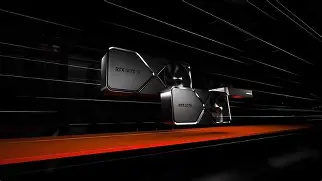
Initial Setup
- Install the latest drivers: Use the vendor-verified drivers where recommended. For gaming, Game Ready drivers typically offer the best in-game optimizations; creators can opt for Studio drivers where beneficial.
- Update system firmware: Apply BIOS updates and firmware patches from the laptop maker to ensure thermal and power management improvements are in place.
- Set the power profile: Use built-in performance modes for gaming sessions and balanced/battery-saving modes for mobile work.
In-Game and Application Tuning
- Enable AI upscaling: Where supported, enable upscaling technologies to improve frame rates while preserving visual fidelity.
- Adjust ray tracing settings: Mix RT features with DLSS-like upscaling—this combination often delivers the best balance of quality and fps.
- Monitor thermals: Use vendor tools or third-party utilities to observe GPU temperature and clock behavior under load; favor sustained clocks over occasional spikes.
Maintenance and Longevity
- Keep vents clear: Ensure intake and exhaust pathways are unobstructed to preserve thermal headroom.
- Software hygiene: Avoid running unnecessary background applications during gaming and rendering sessions to free CPU and I/O resources.
- Professional servicing: If thermal performance degrades, consult service options rather than opening sealed units—this maintains warranty coverage.
Troubleshooting Common Issues
Owners occasionally encounter behaviors that are resolvable with straightforward steps:
- Stuttering or frame pacing problems: Verify driver versions, disable conflicting overlays, and confirm that the refresh rate and V-Sync settings are correctly matched between OS, game, and display.
- Thermal throttling: Switch to a higher thermal profile, reduce ambient temperature, or select lower graphical presets. If persistent, review third-party reviews for chassis thermal capability.
- Driver crashes or artifacts: Roll back to a known-stable driver or test the Studio driver channel for creative workloads. If artifacts persist, hardware diagnostics by the OEM may be required.
- Battery drains rapidly: Use balanced or battery modes for daily tasks, disable unnecessary background apps, and reduce display brightness for longer runtime.
Conclusion
The Nvidia GeForce RTX 5070 Ti is a compelling choice for buyers who want strong gaming performance and modern feature support without moving into the heaviest, highest-cost laptop tier. Its suitability depends heavily on the OEM’s implementation—particularly thermal design and power limits—so informed buying decisions are critical. For gamers who prioritize high-refresh 1080p or solid 1440p performance, and for creators needing a capable mobile GPU for editing and encoding tasks, the 5070 Ti delivers a practical blend of speed and features. Attention to cooling, power profiles, display pairing, and driver management will ensure that owners experience the best possible results from the platform.