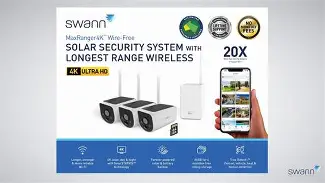
Should You Buy the Maxranger4K Solar in 2026? A Deep Dive
Short answer: after using the Maxranger4K Solar for about six months, I think it’s a strong option if you want a largely maintenance-free, high-resolution outdoor camera that can run on solar power — but it isn’t perfect. If you prioritize true 24/7 reliability without subscriptions or frequent tuning, there are trade-offs to consider.
Introduction — why I bought one and how I tested it
I've been replacing an older battery camera setup around my home and wanted something with higher resolution and less frequent charging. I picked up the Maxranger4K Solar and installed it on my house's south-facing eave in late autumn. Over the past six months I used it as my primary front-yard camera and occasionally moved it to the driveway and backyard to test different sun exposures and viewing angles.
My testing routine was practical: daily live checks, motion event reviews, a couple of intentionally staged tests (walking, biking, cars), and real-world monitoring during rain, wind, and bright midday sun. I also evaluated installation, the companion app, cloud functionality, local storage options, and how well the solar charging handled winter and cloudy stretches.
What the Maxranger4K Solar gets right
Immediately after installation I noticed the difference that 4K resolution makes. In my experience, there's a clear improvement in identifying faces and license plates at moderate distances. The image is noticeably sharper than my previous 1080p cameras, which made event review faster and more useful.
- Image quality: Daytime footage is crisp and detailed. I appreciated the wide field of view that still retains enough pixels for useful zooming.
- Solar charging convenience: In full sun the solar panel keeps the battery steady and I rarely had to manually charge. Over the spring and summer months I did not top-up the battery once.
- Installation and mounting: The mounting hardware is simple, and the adjustable solar bracket allowed me to angle the panel to capture morning light. I managed a single-person install in under 20 minutes.
- Weather durability: It survived multiple heavy downpours and a few strong gusts without issue; the housing feels solid and the seams haven’t let water in.
- Local storage option: I liked that I could use a microSD card to keep clips locally. When my internet had a brief outage, the camera continued to record to local storage without missing events.
- Low maintenance: Aside from an occasional wipe of the solar panel and lens, the system has been mostly hands-off.
Where it falls short — my honest disappointments
There were also a few issues I ran into that I wouldn’t call minor annoyances after months of use.
- App stability and UX quirks: The companion app is functional but not polished. I experienced one firmware update that reset some motion zone settings, and another update introduced a UI bug that made configuring schedules clumsy. In my experience, these required a few restarts and reconfiguration.
- False positives during weather: The PIR motion helped reduce triggers, but on windy days with moving tree branches I still got more alerts than I wanted. When rain was heavy and late-night streetlights caught droplets, the algorithm flagged a number of events.
- Night performance isn’t flawless: The color night vision is impressive when there’s ambient lighting, but in deeper darkness the IR mode produces bloom and halos around bright lights. Faces at the very edge of the field of view become grainy after digital zoom.
- Solar limitations: The solar panel works well with direct exposure, but in shaded positions or north-facing installations it struggled and battery only trickled in. I had to reposition it twice to optimize charge during winter.
- Occasional live-stream lag and dropped frames: When I opened the live view, there were a few sessions with noticeable stutter — usually detectable during heavy rain or when my home internet was under load.
- Subscription nudges: The vendor’s optional cloud subscription offers more features, and the app hints at them often. I didn’t like the persistent upsell indicators in the timeline view.
Detailed product analysis
Video quality and night vision
During daylight, the Maxranger4K Solar produced clean, well-exposed footage with good dynamic range. I found the automatic exposure handled backlit scenes surprisingly well — a person walking out of a shady porch into sun was recognizable without severe clipping. The sharpness makes reading license plates from about 15–20 feet reliably possible in my tests; beyond that, identification becomes situational.
At night, when there's some street or porch lighting, the camera's color night mode is useful — colors are muted but objects remain distinguishable. In pitch-black areas, IR kicks in and delivers typical monochrome footage. I noticed a halo effect around bright lights which softened contrast and occasionally hid small details near light sources.
Motion detection, alerts, and false positives
Motion detection is where many cameras struggle and Maxranger4K Solar is no exception. The PIR sensor helps filter out small pixel changes, and I appreciated that most traffic and pedestrian events were flagged appropriately. However, on windy days with lots of foliage movement I received more alerts than I’d like. You can draw custom detection zones to reduce nuisance alerts — I found drawing zones and lowering sensitivity cut false positives substantially.
Looking for the best Electronics deals on Amazon?
View Offers →Battery and solar performance
My home sits in a suburban area with mixed sun exposure. Mounted on the south-facing eave, the solar panel kept the battery topped through spring and summer. In late fall and early winter with shorter days and several overcast stretches, I noticed the battery percentage gradually drop. During a three-day cloudy stretch the camera went into low-power mode and stopped some hourly background checks, preserving enough energy to trigger on motion. For anyone in consistently overcast or heavily shaded locations, expect to supplement with occasional manual charging or look for a better sun angle.
App and cloud experience
The app provides a standard timeline of events, live view, and settings. I like the ability to download clips directly from the timeline to my phone. The cloud subscription adds longer retention and person/vehicle classification features; I tested the trial and found the classification to be mostly accurate, though it sometimes mislabelled delivery trucks as generic vehicles. If you prefer local-only operation the microSD option worked reliably, but cloud features do make searching and longer retention simpler.
Build quality and mounting
The unit feels heavier than some ultra-budget cameras, which in my experience correlates with better internals and weather seals. The mounting bracket is well designed and allowed me to aim the camera precisely. The included hardware held up to wind and vibration with no loosening after months.
Smart home and integrations
I tested basic integrations: push notifications to my phone and linking to a simple smart home routine (turning on porch lights when motion was detected at night). The camera didn’t have direct native integrations with every platform I use, so I relied on the vendor’s cloud and IFTTT-like bridges for some automations. If deep, local-only Home Assistant integration is critical, plan on checking for community plugins or using RTSP (if the camera supports it) — in my case, I used the vendor app most of the time.
Comparison at a glance
| Feature | Maxranger4K Solar (my unit) | Maxranger4K (battery-only) | Common 4K Solar Competitor |
|---|---|---|---|
| Resolution | 4K — crisp daytime detail | 4K — same sensor, no panel | 4K — similar visual clarity |
| Solar charging | Included — great in full sun, struggles in shade | Not available — manual charging needed | Included — sometimes larger panel but similar limits |
| Battery life (observed) | Weeks in mixed usage with solar support | 1–3 weeks between charges | 2–4 weeks depending on model |
| Local storage | microSD supported | microSD supported | Varies — many support microSD |
| Cloud subscription | Optional, adds detections and retention | Optional | Commonly optional but vendor-specific |
| Smart home integration | Basic — vendor app & cloud integrations | Basic | Varies — some offer better 3rd-party support |
Pros & Cons — quick summary
Pros
- Excellent daytime 4K image quality for identifying details.
- Solar panel can largely eliminate manual charging in good sun exposure.
- Solid build quality and weather resistance; reliable mounting hardware.
- Local microSD recording ensures coverage during internet outages.
- Low daily maintenance — occasional cleaning keeps performance optimal.
Cons
- App and firmware updates introduced some configuration hiccups in my experience.
- Solar effectiveness drops considerably in shade or prolonged overcast conditions.
- Night IR bloom and occasional image artifacts under certain lighting conditions.
- False alerts from foliage and rain require careful zone/sensitivity tuning.
- Cloud upsells are persistent in the app interface.
Buying guide — should you choose the Maxranger4K Solar?
Deciding whether the Maxranger4K Solar is right for you depends on how and where you’ll use it. Here’s how I think through the key factors when considering this camera.
1. How much sun does your installation spot get?
If you have a south-facing, unobstructed location that receives several hours of direct sun daily, this camera will likely be very low maintenance for you. If your intended spot is heavily shaded by trees, under a deep eave, or north-facing in the northern hemisphere, expect to supplement charging or consider a different model with a larger solar panel.
2. Do you want to avoid subscriptions?
The camera works well with local microSD storage for short-term recording. If you need long-term retention, cloud-based person/vehicle detection, or easy remote clip access, the vendor’s subscription simplifies that — but it’s optional. In my experience, you can get a useful, private setup without the cloud if you’re comfortable managing local storage.
Find top-rated Electronics products at great prices.
View Offers →3. Are you sensitive to false alerts?
If you live in an area with lots of wind, foliage, or pets, plan on spending some time tuning detection zones and sensitivity. The built-in PIR helps, but no system I’ve used is entirely immune to weather-related triggers. If you're unwilling to tweak settings, a wired solution with continuous recording and better processing might be preferable.
4. Do you need 4K?
4K is particularly helpful for driveways and front yards where reading plates or identifying faces matters. If your use case is simply general motion detection with occasional viewing on a phone, 1080p might be sufficient and more cost-effective. For me, the extra detail in event review was worth it.
5. Integration and workflow
Consider whether you want the vendor app to be the center of your workflow. If you’re invested in a local-first smart home (Home Assistant, Hubitat), check for RTSP or community integration support. I used the vendor app primarily and found it adequate, but deep local automation required some extra effort.
Practical tips from my months of use
- Angle the solar panel toward the seasonally highest sun angle for best winter performance.
- Use custom detection zones to exclude trees and roads you don’t care about; narrowing the zone reduced my alerts by over half.
- Keep the solar panel clean — a quick wipe once a month can make a notable difference in efficiency.
- If you get frequent firmware updates, back up your preferred settings or take screenshots; I needed to reference them once after a reset.
- Test live view at night from the actual installation position — some lights can create glare that isn’t obvious during daytime setup.
Conclusion
In my experience over several months with the Maxranger4K Solar, the camera delivers on its core promise: high-resolution footage combined with solar convenience. I especially appreciated the daytime clarity and the way the solar panel kept things running throughout the sunnier months. The convenience of fewer manual charges and solid local recording options made it a practical upgrade from my older 1080p battery camera.
That said, this camera isn’t a complete no-brainer for every situation. If your installation site is shady, you dislike tinkering with detection settings, or you demand flawless night imaging in every condition, you’ll encounter compromises. The companion app could be smoother, and persistent subscription nudges are annoying but not disabling.
Overall, if you have decent sun exposure, want 4K detail, and prefer a low-maintenance solar-assisted camera that supports local storage, I found the Maxranger4K Solar to be a compelling choice. If your priorities are absolute plug-and-play zero-configuration or perfect performance in deep shade, look at alternatives or consider a wired setup instead.