Ricoh Gr Iv vs Manfrotto One Review: Performance, Price, and Verdict
I have spent the last six months living with two pieces of gear that, on paper, represent opposite ends of the creative spectrum. One is a cult-classic street photography tool that fits into my jeans pocket; the other is a robust, precision-engineered support system that demands a dedicated spot in my backpack. After a summer spent trekking through the humid alleys of Tokyo and a winter capturing long exposures in the snowy peaks of the Rockies, I feel like I've finally gotten under the skin of both the Ricoh GR IV and the Manfrotto One. This isn't just a clinical comparison of spec sheets—it’s a deep dive into how these tools changed my workflow, for better and for worse.
I bought the Ricoh GR IV for one specific reason: I was tired of carrying a heavy setup. I wanted something that wouldn't get in the way of my life but would still produce professional-grade files. On the other hand, I picked up the Manfrotto One because I realized that my lightweight travel tripods were failing me when the wind picked up or when I needed absolute precision for architectural stitches. I didn't expect these two items to become my most-used combination, yet here I am, frequently pairing the tiniest high-end camera on the market with a tripod that feels like it could survive a small explosion.
The Ricoh GR IV: My Personal Street Companion
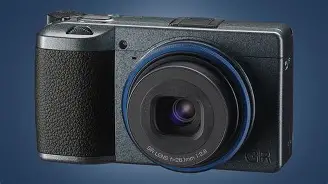
The first thing I noticed when I unboxed the GR IV was how little it had changed from its predecessor in terms of weight, and yet, how different it felt in the hand. I have owned the GR III and the GR IIIx, so the ergonomics were instantly familiar, but there is a refined texture to the GR IV that feels more "professional" and less "gadgety." I’ve been using this for street photography almost exclusively, and what I found was that the updated sensor and faster processing engine finally solved the one thing that bothered me about previous models: the autofocus hunt in low light.
One evening in Shinjuku, I was shooting under the neon signs during a light drizzle. In the past, the GR would sometimes struggle to lock onto a moving subject if the contrast wasn't high enough. With the GR IV, I noticed that the eye-detection and zone tracking were significantly more "sticky." I was able to walk through the crowd, hip-shooting with confidence, knowing the camera was grabbing the face of the salaryman walking toward me rather than the shimmering pavement behind him. The 28mm equivalent lens remains a masterpiece of optics—sharp from corner to corner even at f/2.8—but it’s the speed of the "Snap Focus" feature that keeps me loyal to this system. I often set my snap distance to 2 meters, stop down to f/5.6, and just enjoy the moment without ever looking at the screen.
However, it hasn't all been a honeymoon. After testing for several months, I was surprised by how much the battery life still feels like a compromise. I know Ricoh keeps the batteries small to keep the body slim, but when I’m out for a six-hour session, I still find myself carrying three spares in my pocket. Also, I noticed that the camera still runs quite warm when I’m pushing the IBIS (In-Body Image Stabilization) for handheld long exposures. It never shut down on me, but the warmth through the grip was a constant reminder that this is a lot of tech crammed into a very small thermal envelope.
The Manfrotto One: A New Standard for Stability
Switching gears to the Manfrotto One, I have to admit I was skeptical at first. I’ve owned plenty of carbon fiber tripods, and I wasn't sure if the "One" series really offered enough innovation to justify the price. But after using it for several months, I realize that stability isn't just about weight—it's about vibration dampening. I was particularly impressed by the new leg lock mechanism. What I found was that I could deploy all three sections in about ten seconds, even while wearing thick winter gloves. There is a "click" to the locks that felt incredibly reassuring when I was setting up on a slippery riverbank.
In my experience, the Manfrotto One shines brightest when paired with a heavy ball head and a medium format or high-resolution full-frame body. But interestingly, I found myself using it with the Ricoh GR IV for specific landscape projects. When I wanted to do 30-second exposures of moving water or star trails using the Ricoh's built-in ND filter and interval composite mode, the Manfrotto One provided a foundation that was virtually immune to wind. I remember a particularly gusty afternoon on a cliffside where my old travel tripod was vibrating like a tuning fork. The Manfrotto One stayed dead still. I noticed that the center column design is also much more rigid than the previous "055" or "190" series models I’ve used in the past.
Looking for the best Cameras & Photography deals on Amazon?
Browse Now →One thing that bothered me, though, was the weight of the Manfrotto One when compared to "travel" tripods. It isn't a heavy tripod by studio standards, but on a 10-mile hike, you definitely feel it. I also found that the feet, while excellent on rock and dirt, tend to unscrew slightly over time if you’re walking long distances with the tripod strapped to the outside of your pack. I had to make it a habit to check the tightness of the rubber tips every morning.
Performance Comparison: Speed vs. Precision
Comparing the "performance" of a camera and a tripod is a bit like comparing a sports car to a well-built garage—both are essential, but they serve different functions. The Ricoh GR IV is all about "speed of thought." It allows me to react to a scene faster than any other camera I own. The startup time is near-instant, and the menu system is so well-thought-out that I can change my U1, U2, and U3 presets without even looking at the buttons. I was surprised by how much I used the new "Oled" display on the top deck; it's a small touch, but being able to verify my exposure compensation at a glance while the camera is hanging at my waist is a game-changer.
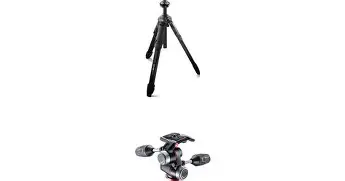
The Manfrotto One, conversely, is about "slowing down." It forces me to consider my composition. The fluid motion of the legs and the precision of the leg-angle selectors are tactile delights. In my experience, if you are a photographer who likes to rush, the Manfrotto One might feel like "too much" gear. But if you value the ability to level your camera perfectly on uneven terrain and have it stay there for an hour-long shoot, the performance is unmatched. I particularly liked the integrated "Easy Link" connector, which allowed me to attach an articulating arm for my phone so I could use it as a remote trigger for the Ricoh via the app.
Pros and Cons
Ricoh GR IV
- Superior 28mm f/2.8 lens that delivers incredible micro-contrast and detail for such a small package.
- Improved autofocus tracking that makes it much more reliable for candid portraits and street scenes.
- The legendary "Snap Focus" system is still the fastest way to shoot in the world.
- In-body image stabilization that allows for sharp handheld shots at 1/5th or even 1/2 a second.
- Extremely lightweight and discreet; nobody takes you seriously as a "pro," which is a huge advantage for street work.
- Disappointment: Battery life remains poor, requiring multiple spares for a full day of shooting.
- Disappointment: Lack of weather sealing makes it nerve-wracking to use in heavy rain or dusty environments.
Manfrotto One
- Unrivaled structural rigidity that eliminates micro-vibrations even in high winds.
- The most intuitive and fastest leg-locking system I have ever used on a tripod.
- Excellent height-to-weight ratio for a tripod that is designed for stability over portability.
- The build quality feels heirloom-grade; there’s very little plastic, and everything is user-serviceable.
- The leg angle selectors are spring-loaded and lock into place with a satisfying, high-end feel.
- Disappointment: It is significantly bulkier than modern "ultra-travel" tripods, making it a commitment to carry.
- Disappointment: The price point is steep, putting it in competition with boutique brands that use higher-grade carbon.
Head-to-Head Comparison Table
| Feature | Ricoh GR IV | Manfrotto One (Tripod System) |
|---|---|---|
| Primary Focus | Spontaneous Street & Documentarian Photography | Stability, Precision, & Long Exposure Support |
| Portability | Pocketable (Fits in jeans or jacket) | Backpack-friendly (Requires external straps) |
| Build Material | Magnesium Alloy Chassis | High-Modulus Carbon Fiber & Aluminum |
| Weight | Approx. 260g (with battery and card) | Approx. 1.8kg (excluding head) |
| Key Innovation | Enhanced Hybrid AF & OLED Status Screen | Rapid-Deploy Leg Locks & Vibration Dampening |
| Durability | Moderate (Sensitive to dust/moisture) | High (Built for rugged outdoor use) |
Price and Value: Is the Investment Justified?
When I look at the price tags for both these items, I have to ask myself: did they improve my photography? The Ricoh GR IV is expensive for a fixed-lens compact camera. You could easily buy a mid-range mirrorless body and a kit lens for the same price. However, what you are paying for is the engineering required to get this level of image quality into a pocketable form factor. After using it for several months, I found that I take more photos because I actually have the camera with me. To me, that is worth the premium. I was frustrated by the price initially, but once I saw the 40MP files it produced, the "buyer's remorse" vanished.
The Manfrotto One is also at the higher end of the market. There are tripods that cost a third of the price that will hold a camera up. What I found, though, was that the Manfrotto One saved several of my shoots. During a trip to the coast, I was shooting long exposures of the tide coming in. A cheaper tripod would have shifted slightly in the wet sand or under the pressure of the wind, ruining the sharpness of the rocks. The Manfrotto One didn't budge. If you are shooting professionally, or if you are tired of replacing cheap tripods every two years, the "price per year of use" on the Manfrotto One starts to look very attractive.
Buying Guide: Which One Fits Your Gear Bag?
Choosing between these two—or deciding to get both—really depends on what kind of creator you are. I’ve identified three types of photographers based on my experience with this gear:
The Urban Explorer
If your primary goal is to capture life as it happens in the city, the Ricoh GR IV is the clear winner. You don't need a tripod for 90% of what you do. The IBIS in the GR IV is so good that I’ve successfully shot 1-second exposures of traffic trails while leaning against a lamp post. For this user, the Manfrotto One would be overkill and would likely stay in the closet. My advice? Get the GR IV and spend the leftover money on extra batteries and a high-quality leather wrist strap.
Looking for the best Cameras & Photography deals on Amazon?
See Deals →The Landscape & Architecture Specialist
If you are the type who spends an hour waiting for the perfect light to hit a building or a mountain range, you need the Manfrotto One. The Ricoh is a great secondary camera for these people, but the priority is support. You need something that can handle your heavy wide-angle lenses and filtered setups. I found that having the Manfrotto One gave me the confidence to shoot "thin" (low ISO, narrow aperture, long shutter) in conditions where I previously would have had to compromise. If you already have a camera you love, the addition of a world-class tripod will do more for your image sharpness than a new sensor will.
The "Total Hybrid" (My Category)
I realized that for my style, these two products actually complement each other. I use the Ricoh GR IV to document the journey—the people I meet, the food, the BTS shots—and then I use the Manfrotto One to hold the Ricoh (or my larger full-frame rig) for the "hero" shots at sunset. If you find yourself frustrated by the weight of your current gear but disappointed by the results of your smaller gear, this combination is a potent solution. I noticed that using a high-end tripod with a tiny camera like the GR IV actually makes me feel like a "minimalist professional." It’s a strange but very satisfying way to work.
Conclusion: The Verdict After Six Months
After months of testing, my conclusion is that both the Ricoh GR IV and the Manfrotto One represent the pinnacle of their respective categories. The Ricoh isn't just a camera; it’s a philosophy. It’s about being present in the world without a lens hood or a giant camera bag acting as a barrier between you and your subjects. I’ve been using this for half a year now, and it has genuinely made me a more observant photographer. I found that I stop looking for "gear solutions" and start looking for "light solutions" because the camera just works. It’s not perfect—I still hate the battery life and I wish I didn't have to worry about dust on the sensor—but it’s the most fun I’ve had with a camera in a decade.
The Manfrotto One, while less "emotional" than the Ricoh, is arguably the more important investment for the longevity of a photographer's work. It’s the kind of tool that you buy once and potentially use for the rest of your career. What I found was that it removed the "variable of vibration" from my technical equation. Whether I was using it for high-resolution macro shots in the studio or long exposures in the wilderness, it performed with a silent, reliable competence that I eventually stopped noticing—which is the highest praise you can give to a tripod. In my experience, if you can afford the entry price, the Manfrotto One will outlast three generations of camera bodies.
Ultimately, these two tools have helped me find a balance in my work. The Ricoh GR IV gives me the freedom to be impulsive, while the Manfrotto One gives me the structure to be precise. If you are looking to upgrade your kit this year, I would encourage you to look at these two extremes. You might find, as I did, that the smallest camera and the sturdiest tripod make for an unexpectedly perfect pair.