Is the Ninja better than the Nutribullet? We Tested Both
Category: Electronics
Introduction
Blenders and personal food processors have become staples in modern kitchens. Among the most recognizable names are Ninja and Nutribullet. Both brands promise powerful motors, convenient designs, and the ability to turn whole fruits, vegetables, nuts, and ice into smooth drinks, sauces, and baby food. But which one performs better in real-world use? This article presents an objective, hands-on comparison built around common buyer priorities: blending performance, versatility, noise and footprint, cleaning and maintenance, durability, and value for money. The testing methodology and real-world use cases are described, followed by an in-depth review of each brand, a side-by-side comparison table, pros and cons lists, and a practical buying guide.
How the testing was done
The testers selected representative models from each brand that are commonly purchased by consumers: typical personal/high-speed compact models and more robust countertop models. Tests included:
- Smoothie blending: leafy greens, frozen fruit, yogurt, and ice
- Nut processing: grinding almonds into coarse pieces and into nut butter
- Ice crushing: cocktails and frozen desserts
- Hot preparations: pureeing cooked soup to examine heat retention and lid safety
- Noise measurement: perceived volume during heavy loads
- Cleaning trial: disassembly, dishwasher compatibility, and ease of rinsing
- Repeated runs to evaluate motor cooling and any signs of stress
Results are reported in practical, reproducible terms—what a typical buyer will notice and need to know when making a purchase decision.
Detailed analysis: Ninja
Ninja offers a broad lineup spanning personal blenders, complete countertop systems, and more advanced food processor-style appliances. The brand emphasizes raw power, modular accessories, and versatility. In testing, Ninja’s strengths and limitations became evident across common household tasks.
Performance
For smoothies and frozen blends, Ninja’s high-power countertop units produced very smooth textures quickly, handling dense frozen fruit and ice with minimal stratification. The multi-blade assemblies and wider pitcher designs promote circulation, reducing the need to stop and stir. For nut processing, coarse chopping was efficient; making nut butter took longer and generated noticeable heat, but the most powerful Ninja models completed the job without straining.
Design and ergonomics
Ninja’s larger pitchers and bowls are beneficial for batch cooking (multiple smoothies or family-sized soups). Lid designs are generally secure and easy to lock into place. Some models include multiple attachments (individual cups, large pitchers, food processor bowls), which add versatility but increase the number of parts to wash and store.
Cleaning and maintenance
Removable blades and dishwasher-safe containers simplify cleanup. However, multi-blade assemblies can trap fiber and require careful rinsing. The base units wipe clean easily, but crevices around control panels on certain models can collect residue over time.
Noise and footprint
Ninja units are loud under heavy loads—something buyers should expect when using high-powered motors to pulverize ice and frozen fruit. Countertop models also claim compactness relative to conventional professional blenders but still require counter or cabinet storage for multiple attachments.
Common buyer concerns addressed
- Power vs. space: Ninja suits those who prioritize power and multi-functionality and who have space for larger pitchers and accessories.
- Consistency: Great for users who want smooth, drinkable textures without pre-thawing fruit.
- Accessories: Appeals to buyers looking for a system that can act as a food processor, chopper, and blender in one.
Detailed analysis: Nutribullet
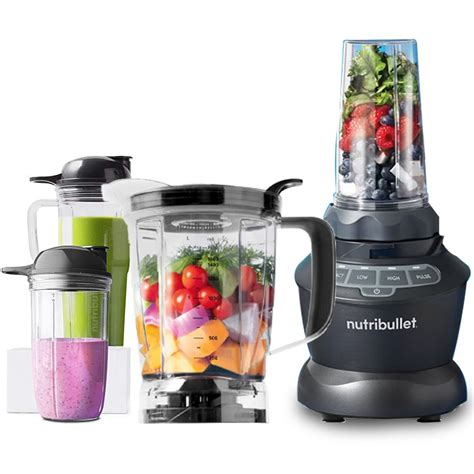
Nutribullet built its reputation on compact, personal blenders designed primarily for single-serve smoothies and quick nutrient extraction. Its ecosystem focuses on ease of use, small footprint, and quickly converting whole fruits and vegetables into drinkable blends. The testing highlighted areas where Nutribullet shines and areas where it may fall short for certain buyers.
Performance
Nutribullet personal blenders are fast for single-serve smoothies, particularly when ingredients are layered correctly (liquids at the bottom, softer ingredients next, frozen items on top). They are convenient and produce good results with softer ingredients. When faced with tougher tasks—large quantities, heavy nut processing, or prolonged ice-crushing—smaller Nutribullet models can slow down and require more pulsing and scraping. Higher-end Nutribullet models with larger motors handled tougher tasks more capably, but they still tend toward smaller capacity and quicker heat buildup when used continuously.
Design and ergonomics
Nutribullet’s compact design and travel-capable cups appeal to users with limited counter space or those who want a quick cup to go. The simple twist-and-lock mechanism is intuitive. Because many Nutribullet configurations use blade assemblies that screw into cups, the system has fewer parts overall which simplifies storage.
Discover deals on Electronics — updated daily.
Browse Now →
Cleaning and maintenance
Cups and blades rinse clean quickly; many parts are dishwasher-safe. The simplicity of the design reduces places for food to hide. Blade assemblies should be handled with care during cleaning to avoid cuts.
Noise and footprint
Nutribullet units are similarly loud when processing ice or frozen fruit, but the smaller footprint and single-serve focus mean they are often used for shorter durations, which mitigates the noise issue in practice. They are a good match for apartments, dorm rooms, and anyone who values compact storage.
Common buyer concerns addressed
- Convenience: Ideal for buyers who want a no-fuss, quick smoothie maker for single servings.
- Counter space: Designed for those with minimal storage who prioritize portability.
- Cleaning: Appeals to users who prefer fewer parts and faster cleanup.
Comparison table: Ninja vs Nutribullet
| Category | Ninja (typical strengths) | Nutribullet (typical strengths) |
|---|---|---|
| Typical motor power | Wide range; many models emphasize higher wattage for heavy-duty tasks | Designed for compact power; some high-end models approach countertop capability |
| Best for | Batch smoothies, soups, food processing, intensive ice crushing | Single-serve smoothies, quick prep, portability |
| Capacity | Larger pitchers and bowls available, family-sized options | Smaller cups and personal pitchers, limited batch capability |
| Versatility | High; multiple attachments for chopping, dough, and processing | Moderate; primarily blending with some accessory options |
| Ease of cleaning | Dishwasher-safe parts but multi-blade areas can trap debris | Simple parts, quick rinse, fewer crevices |
| Noise | Loud under load due to higher power | Loud under load but shorter run times often reduce nuisance |
| Price considerations | Range from budget to premium; higher cost for more powerful, multi-function systems | Generally positioned in the affordable to mid-range for personal blenders |
| Ideal user | Home cooks who want a multi-function machine for family use | Individuals or couples wanting fast personal smoothies and portability |
Pros & Cons
Ninja — Pros
- Powerful motors: Handle frozen fruit, ice, and tougher jobs with fewer pauses.
- Versatility: Multiple attachments allow blending, processing, and chopping in one system.
- Batch capability: Large pitchers and bowls are useful for families or meal prep.
- Consistent textures: Wider jars and multi-blade designs improve circulation for smooth results.
Ninja — Cons
- Noise: Higher power means louder operation.
- More parts: Additional attachments increase storage needs and cleaning steps.
- Size: Larger footprint than personal blenders, potentially unsuitable for small kitchens.
Nutribullet — Pros
- Compact and convenient: Small footprint and travel cups make it easy to use and store.
- Simple operation: Intuitive twist-lock or one-button interfaces are user-friendly.
- Quick cleanup: Fewer parts mean faster washing by hand or in dishwasher.
- Good for single serves: Designed to make one smoothie quickly with minimal prep.
Nutribullet — Cons
- Limited batch size: Not ideal for family-sized prep or cooking larger quantities.
- Less capable for heavy-duty tasks: Smaller motors in entry-level models struggle with consistent nut butter or long ice-crushing sessions.
- Heat buildup: Prolonged use can warm the contents and stress the motor on compact models.
Real-world use cases and recommendations
Buyers typically have specific workflows in mind. Below are common scenarios and which brand tends to suit each case better.
Daily single-serve smoothies for commuting
Nutribullet is often the better match. Its travel cups and compact profile make it convenient for morning routines where speed and portability matter most. The user can blend, screw on a lid, and take the drink directly.
Family breakfasts or batch meal prep
Ninja’s larger pitchers and more powerful motors lend themselves to batch work. Preparing smoothies for multiple people, puréeing soups for dinner, or mixing pancake batter benefit from larger capacity and longer, more powerful runs.
Nut butters and grinding tasks
Both brands can handle nut processing, but Ninja’s higher-powered countertop models complete the task with less time and fewer passes. For occasional nut grinding, a higher-end Nutribullet model may suffice, but buyers should expect to scrape and pulse more frequently.
Frozen cocktails and crushing ice
Ninja excels for frequent frozen-drink use due to better ice-crushing consistency. Nutribullet models will handle occasional single servings well but can fatigue under repeated heavy use.
Small kitchens or limited storage
Nutribullet’s minimal footprint and fewer attachments make it an attractive option for dorms, studios, or small apartments.
Buying guide: What to look for
When choosing between Ninja and Nutribullet, consider the following buyer-centric factors to match the appliance to lifestyle and needs.
1. Intended use and capacity
Decide whether most blending will be single-serve or multi-serve. If the goal is daily single smoothies, a compact Nutribullet-style personal blender may be ideal. For batch prep or cooking tasks, choose a powerful Ninja countertop system with larger pitchers.
2. Motor power and duty cycle
Look beyond the headline wattage and think about duty cycle—how long the blender can run before needing cool-down. Higher wattage typically offers better performance on tough ingredients but also generates more noise and heat. If planning to make long blends or nut butter often, favor more powerful motors designed for continuous use.
Find top-rated Electronics products at great prices.
See Deals →3. Blade design and circulation
Blade geometry affects texture. Multi-blade assemblies and wider jars that encourage circulation tend to produce smoother blends. For leafy greens and fibrous vegetables, a design that pulls ingredients down into the blades will reduce chunks.
4. Ease of cleaning
Removable and dishwasher-safe parts are helpful, but pay attention to how easy it is to remove trapped fibers. Fewer parts mean less time cleaning—important for busy routines.
5. Accessories and storage
Assess what accessories are included and whether the additional functionality is useful or just added clutter. Consider whether the storage space in the kitchen will accommodate extra bowls, lids, or cups.
6. Durability and warranty
Check reviews for long-term reliability and read warranty terms. A longer warranty can indicate manufacturer confidence and can be a deciding factor when appliances are used daily.
7. Noise and location of use
If the blender will be used early in apartments or in shared living situations, noise matters. High-power machines are inherently louder; consider using them at times that won’t disturb others or choose quieter models if available.
8. Safety features
Automatic shutoffs, secure locking mechanisms, and cool-touch designs for hot liquids matter. When puréeing hot soups, ensure the model’s lid design is safe and appropriate for heated contents to avoid pressure build-up.
Price/value considerations
Consumers often weigh upfront cost against long-term versatility. Nutribullet units typically target buyers wanting an affordable, no-frills personal blender. Ninja covers a wider price range; higher-tier models can cost more but may replace several appliances (food processor, chopper, and blender). Buyers should match expected use frequency to the investment: a pricier unit pays off for heavier, more varied use; for light, occasional smoothies, a compact, less expensive model is more economical.
Conclusion
Both Ninja and Nutribullet have distinct strengths aligned to different user needs. Nutribullet excels as a compact, convenient personal blender for single-serve smoothies and quick cleanup. It suits commuters, small households, and those prioritizing portability and simplicity. Ninja, meanwhile, tends to offer greater power and versatility, making it a better fit for families, batch cooks, and anyone who wants one system to perform multiple kitchen roles—blending, food processing, and heavy ice crushing.
Ultimately, the “better” choice depends on lifestyle. For portability, simplicity, and single-serve speed, Nutribullet is often preferred. For multi-function performance, larger capacity, and more demanding tasks, Ninja typically holds the edge. Buyers should consider intended use, capacity needs, motor duty cycle, and how much time they can spend on cleanup and storage when making a decision. By matching these priorities to the brand and model features described above, a purchaser can choose the machine that best serves their everyday kitchen habits.