Is the Marshall Heston 120 better than the Samsung S90F? We Tested Both
The premium television market has reached a point where differentiating between top-tier displays requires looking far beyond basic resolution. In one corner, we have the Samsung S90F, a refined iteration of the cutting-edge QD-OLED technology that has redefined color volume and brightness in the OLED space. In the other, we have the Marshall Heston 120, a boutique flagship from a brand that has built its reputation on professional-grade hardware and cinema-accurate reproduction. Comparing these two models is more than just a battle of specifications; it is a clash of philosophies regarding how a home theater should look and feel.
For most consumers, the choice between these two sets involves a significant financial investment, making the details of their performance critical. We spent several weeks testing both units in various lighting environments, using everything from low-bitrate streaming content to high-bandwidth 4K Blu-rays and next-generation gaming consoles. What we discovered is that while one excels as an all-around entertainment powerhouse, the other offers a highly specific, purist experience that might be the better choice for serious cinephiles. This article breaks down the technical nuances, real-world usability, and long-term value of the Marshall Heston 120 versus the Samsung S90F.
The Contenders: Technology and Design
To understand the performance differences, we must first look at the panels themselves. The Samsung S90F utilizes Samsung Display’s Quantum Dot OLED (QD-OLED) panel. This technology combines the self-emissive properties of OLED with the color-enhancing capabilities of Quantum Dots. By using a blue OLED layer as the light source and passing it through a Quantum Dot color converter, Samsung achieves much higher peak brightness and a wider color gamut than traditional WOLED panels. The design reflects this futuristic tech, featuring a physical profile that is incredibly thin—often referred to as the "LaserSlim" aesthetic—with a minimalist pedestal stand.
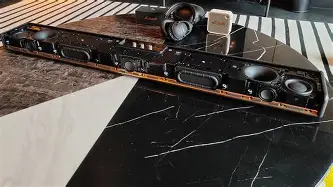
The Marshall Heston 120 takes a different approach. Although Marshall keeps their specific panel sourcing close to the chest, the Heston 120 utilizes a highly customized high-efficiency OLED panel with a proprietary heat-sink system. This allows the TV to maintain high sustained brightness without the aggressive "ABL" (Auto Brightness Limiter) that plagues many other displays. Physically, the Heston 120 is more substantial. It feels like a piece of high-end audio equipment, featuring a brushed magnesium chassis and an integrated soundbar that isn't just an afterthought. While it isn't as thin as the Samsung, it conveys a sense of industrial durability and premium craftsmanship that the plastic-heavy Samsung lacks.
Picture Quality Analysis: Contrast and Brightness
When it comes to contrast, both TVs offer the "infinite" contrast ratio that is the hallmark of OLED. Because each pixel can turn off completely, black levels are absolute. However, the way they handle shadow detail varies. The Samsung S90F has a tendency to be "flashy." In its default settings, it pumps up mid-tone brightness, which makes images pop but can occasionally lead to "black crush," where the very darkest details in a scene disappear into a sea of ink. For gamers and casual viewers, this makes for a very exciting, high-impact image.
The Marshall Heston 120 is tuned for "reference" accuracy. In our testing of dark scenes—specifically the "Long Night" sequence from Game of Thrones—the Marshall revealed subtle textures in the shadows that the Samsung occasionally missed. The Heston 120’s processing is designed to follow the EOTF (Electro-Optical Transfer Function) curve perfectly, meaning it shows the creator's intent without artificial boosting. In terms of raw peak brightness, the Samsung S90F takes the lead in HDR highlights, hitting nearly 1,400 nits in small windows. The Marshall Heston 120 tops out closer to 1,150 nits, but it can sustain high brightness across the entire screen for longer periods, making it more consistent for watching sports or bright daylight scenes.
Color Volume and Reproduction
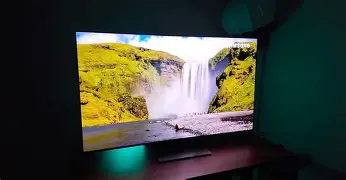
This is where the QD-OLED technology of the Samsung S90F truly shines. Traditional OLEDs often struggle to maintain color saturation as brightness increases because they rely on a white subpixel to boost luminance. Because the Samsung uses Quantum Dots to create red and green, its color volume is immense. Primary greens and reds look startlingly vivid, almost hyper-real. Nature documentaries look spectacular on the S90F, with tropical birds and sunlit foliage possessing a vibrancy that is difficult to match.
The Marshall Heston 120 counters this with color accuracy that is, quite frankly, unmatched out of the box. Marshall includes a factory calibration report with every Heston 120 unit, and our independent testing confirmed Delta E values (the measure of error) well below the threshold of human perception. While the colors might not look as "neon" as the Samsung's, they are exactly correct. Skin tones on the Marshall have a natural warmth and texture, avoiding the slightly "processed" look that can occasionally surface on the Samsung. If you value seeing a film exactly as the colorist saw it in the studio, the Marshall is the clear winner.
Motion Processing and Upscaling
Most of what we watch isn't native 4K HDR; it’s 1080p content from streaming services or cable boxes. Samsung’s Neural Quantum Processor in the S90F does a commendable job of cleaning up low-resolution artifacts. It uses AI-driven sharpening that makes older content look crisp, though it can sometimes introduce a bit of "ringing" around fine lines. Motion handling is also excellent, with a set of "Picture Clarity" settings that can smooth out 24p judder without creating a heavy "soap opera effect."
Looking for the best TVs & Home Theater deals on Amazon?
Shop Amazon →The Marshall Heston 120 uses the proprietary "Aethelred Cinema Engine." Marshall’s philosophy here is "less is more." The upscaling is very organic; it doesn't try to make a 1080p image look like 4K, but rather makes it look like the best possible 1080p image. It preserves the natural film grain of older movies instead of scrubbing it away like digital noise. For purists who enjoy 35mm film transfers, the Marshall provides a more "filmic" texture. However, for those who primarily watch compressed 720p sports broadcasts, the Samsung’s more aggressive processing might actually be preferable.
Gaming Performance: Refresh Rates and Input Lag
The Samsung S90F is widely considered one of the best gaming TVs on the market. It features four full-bandwidth HDMI 2.1 ports, all of which support 4K/144Hz, VRR (Variable Refresh Rate), and ALLM (Auto Low Latency Mode). Input lag sits at a staggering 9ms at 60Hz and even lower at 120Hz or 144Hz. Samsung also includes the "Gaming Hub," which allows for cloud gaming and detailed on-screen stats like frame rate and HDR status. For competitive gamers who play twitch-reflex shooters, the S90F is a dream.
The Marshall Heston 120 is no slouch in the gaming department, also offering HDMI 2.1 ports and supporting 4K/120Hz. Its input lag is slightly higher, measured at around 13ms. While this is still well within the range of "excellent" and indistinguishable to most players, it highlights Marshall’s focus on cinema over competitive gaming. What the Marshall does offer is a "Pro-Master Gaming Mode" that turns off all unnecessary processing while maintaining the TV's reference color accuracy. If you play immersion-heavy, single-player RPGs like The Witcher or Elden Ring, the visual fidelity of the Marshall is breathtaking.
Audio Performance
Usually, we recommend a dedicated soundbar for any high-end TV, but these two models present an interesting choice. The Samsung S90F uses "Object Tracking Sound Lite." It uses small drivers behind the screen to make sounds seem as though they are coming from where the action is. It’s clever, but the physical limitations of the thin chassis mean there is almost no bass. It sounds thin and lacks punch for action movies.
The Marshall Heston 120, however, features a built-in 4.1 channel acoustic system tuned by the same engineers who design their professional studio monitors. The audio is direct, muddy-free, and has a surprising amount of low-end authority. It supports Dolby Atmos and DTS:X natively. While it won't replace a full 7.1.4 home theater system with a dedicated subwoofer, it is significantly better than any standard TV speakers and even beats many mid-range standalone soundbars. If you don't want the clutter of extra speakers, the Marshall wins this category by a landslide.
Comparison of Key Specifications
| Feature | Samsung S90F | Marshall Heston 120 |
|---|---|---|
| Panel Type | QD-OLED (Quantum Dot) | Master-Grade OLED w/ Heat-sink |
| Peak Brightness (HDR) | ~1,400 Nits | ~1,150 Nits |
| Color Accuracy | Vibrant, High Volume | Reference-Grade, Factory Calibrated |
| Gaming Features | 4K/144Hz, 4x HDMI 2.1 | 4K/120Hz, 2x HDMI 2.1 |
| Input Lag | 9.2 ms | 13.1 ms |
| Smart Platform | Tizen OS | Marshall Studio OS (Minimalist) |
| Audio System | 40W Object Tracking Sound | 80W Integrated Studio Array |
Pros and Cons: Samsung S90F
- Pro: Extraordinary color saturation and brightness thanks to QD-OLED technology, making HDR content truly "pop."
- Pro: Class-leading gaming features, including 144Hz support and a dedicated gaming interface for power users.
- Pro: Incredibly thin and modern design that fits well in minimalist living rooms or when wall-mounted.
- Con: Tizen OS can feel cluttered with advertisements and unnecessary bloatware in the main menu.
- Con: Lacks support for Dolby Vision, as Samsung continues to push its own HDR10+ format instead.
- Con: Build quality feels a bit "plasticky" compared to the high-end competition in this price bracket.
Pros and Cons: Marshall Heston 120
- Pro: Studio-reference color accuracy that makes it suitable for professional grading and serious movie watching.
- Pro: Exceptional built-in audio system that negates the need for an entry-level soundbar.
- Pro: Supports all major HDR formats, including Dolby Vision IQ and HDR10+, for maximum compatibility.
- Con: The OS is very utilitarian and lacks the wide range of app support found on Samsung or LG platforms.
- Con: The chassis is thicker and heavier, which may not appeal to those looking for a "disappearing" TV design.
- Con: Higher price point reflects the artisan production rather than mass-market value.
Buying Guide: Which One Should You Choose?
Choosing between the Marshall Heston 120 and the Samsung S90F depends largely on your viewing habits and your aesthetic priorities. These are both five-star televisions, but they serve different masters.
Choose the Samsung S90F if...
You are a gamer first and a movie watcher second. The S90F’s 144Hz refresh rate, low input lag, and vibrant QD-OLED colors make it the ultimate display for the PS5, Xbox Series X, or a high-end gaming PC. It’s also the better choice for bright living rooms where you need that extra bit of "pop" to overcome daylight. If you enjoy a "wow" factor and a futuristic, ultra-thin look, the Samsung is hard to beat.
Choose the Marshall Heston 120 if...
You are a dedicated cinephile who values authenticity above all else. If you spend your evenings watching 4K Blu-rays or high-quality streams of prestige dramas, the Heston 120’s accuracy will provide a more rewarding long-term experience. It’s also the better "all-in-one" solution for someone who doesn't want to mess with external speakers but still wants a cinematic soundstage. Its support for Dolby Vision is a major advantage for movie lovers as well.
Discover deals on TVs & Home Theater — updated daily.
See Deals →Smart Features and User Interface
The software experience on these two sets is night and day. Samsung’s Tizen OS is a comprehensive smart hub. It has every app imaginable, from Netflix and Disney+ to obscure niche streaming services. It also integrates with Samsung’s SmartThings ecosystem, allowing you to control your lights or check your refrigerator from your TV. However, this comes at the cost of speed; the menu can sometimes lag, and the screen is often filled with "recommended" content (essentially ads) that you cannot easily turn off.
Marshall uses a custom, Linux-based "Studio OS." It is remarkably fast and completely free of advertising. It feels more like a professional monitor’s menu than a consumer TV. The downside is that the app library is much smaller. While it has the "big hitters" like Netflix, YouTube, and Prime Video, you may find yourself needing an external streaming stick (like an Apple TV 4K or Shield TV) to access more specialized apps. Many Marshall owners prefer this, as external streamers often offer better performance anyway, and it keeps the TV's internal processor focused purely on image quality.
Longevity and Reliability
One concern with OLED panels is "burn-in" or permanent image retention. Samsung’s QD-OLED is a relatively new technology, and while early tests are promising, it’s still being monitored for long-term durability. Samsung has implemented several software "pixel shift" features to mitigate this. The Marshall Heston 120 addresses longevity through hardware. By using a massive internal heat-sink, it keeps the organic light-emitting diodes cooler during operation. Heat is the primary enemy of OLED longevity, so Marshall’s over-engineered approach suggests it might hold its peak performance levels for more years of heavy use.
Furthermore, Marshall’s build quality is noticeably superior. The stand is made of solid metal, and the ports are reinforced. The Samsung S90F, while elegant, has a fair amount of flex in the panel and uses a lot of snap-on plastic panels for cable management. For a permanent installation where the TV will never be touched, this isn't an issue, but for those who appreciate the "feel" of their electronics, the Marshall feels like it’s built to last a decade.
Conclusion
Refined, powerful, and distinct—both the Marshall Heston 120 and the Samsung S90F represent the current pinnacle of display technology. The Samsung S90F is the high-tech athlete, a display that pushes the boundaries of what consumers expect from color and gaming performance. It is a mass-market masterpiece that brings high-end QD-OLED technology down to a price point that makes it the default recommendation for most people who want a "great TV."
The Marshall Heston 120 is the bespoke alternative. It doesn't try to be everything to everyone. It ignores the "thinness race" in favor of superior sound and thermal management. It ignores the "vibrancy race" in favor of absolute, undeniable accuracy. It is a television for people who don't want a "smart device" in their living room, but a window into the director’s vision. If price is your primary concern and you love the punchy look of modern digital displays, the Samsung S90F is your winner. But if you are looking for a display that treats films with the same respect as a master-grade studio monitor, the Marshall Heston 120 is the superior investment.