A Professional's Take on the New 4 Slice Toaster
In the hierarchy of kitchen appliances, the toaster often occupies a humble position. It is frequently relegated to the status of a "commodity" item—something purchased in haste based on aesthetic or price point rather than performance metrics. However, for the culinary professional or the discerning home cook, the mechanics of browning bread are far from simple. The transition from a standard 2-slice configuration to a modern, high-capacity 4-slice toaster represents more than just a doubling of throughput; it represents a significant shift in kitchen workflow, energy management, and breakfast consistency. This analysis explores the nuances of the latest generation of 4-slice toasters, examining why these units have become the essential centerpiece for busy households and small-scale professional environments alike.
What defines a "professional" take on such a device is an obsession with thermal distribution and cycle recovery. While a casual user might only care that their bread pops up brown, a professional looks for edge-to-edge uniformity, the ability to handle varying moisture contents in artisanal sourdough versus processed white bread, and the mechanical durability of the lever and heating elements. The new wave of 4-slice toasters entering the market today attempts to bridge the gap between industrial reliability and domestic elegance, offering features that were once the exclusive province of commercial galley equipment.
The Evolution of Multi-Slot Toasting
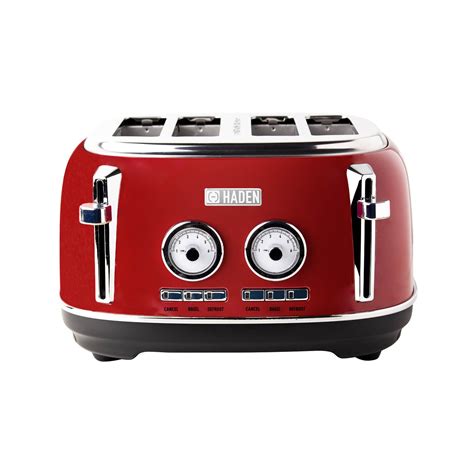
Historically, the move to four slots was often just two 2-slice units fused into a single chassis. This resulted in bulky, heat-bleeding machines that took up excessive counter space without providing incremental value. The new generation has solved this through integrated logic boards and dual-independent controls. This independence is the cornerstone of the modern 4-slice experience. It allows a household to simultaneously prepare a deeply charred rye bread on the left side while gently warming a delicate brioche on the right. From a professional standpoint, this versatility is what justifies the larger footprint.
Furthermore, the internal architecture has evolved. Older models relied on simple nichrome wires wrapped around mica sheets, which often led to "hot spots" where certain segments of the toast would burn while the edges remained pale. The premium 4-slice units now utilize advanced element spacing and, in some high-end cases, quartz heating technology. Quartz elements reach peak temperature almost instantaneously and provide a more penetrating infrared heat, which is essential for achieving that elusive "crunchy exterior, soft interior" balance that distinguishes a great piece of toast from a dried-out rusk.
Detailed Product Analysis: Engineering and Performance
When evaluating the performance of the latest 4-slice models, several key engineering factors come to the forefront. The first is slot width and depth. Buyers typically care about whether their New York-style bagels or thick-cut "Texas toast" will fit without being mangled by the internal cages. A professional-grade unit features extra-wide slots—often 1.5 inches or more—coupled with self-centering racks. These racks are vital; if a thin slice of bread leans too close to one side of elements, it will toast unevenly. The mechanical precision of the centering mechanism is a primary indicator of overall build quality.
Another critical area of analysis is the "Shade Control" calibration. Most consumer toasters use a simple bimetallic strip or a basic timer, but the latest professional-leaning models use electronic sensors to monitor internal temperature. This is important because of the "heat stacking" effect. In a standard toaster, the second round of toast always gets darker than the first because the unit is already hot. A sophisticated 4-slice toaster compensates for this, automatically shortening consecutive cycles to ensure that the "Level 4" setting produces the same golden-brown result at 7:00 AM as it does at 8:30 AM.
The Importance of Specialized Modes
Beyond simple browning, the utility of a 4-slice toaster is expanded by its digital presets. Professionals look for specific logic in these modes:
-
Bagel Mode: This is not just a marketing term. A true professional bagel setting disables or reduces the heat of the outer elements while maintaining full power on the inner elements. This toasts the "cut" side of the bagel to a crisp while merely warming the "crust" side, preserving the chewy texture that bagel aficionados demand.
Defrost and Toast: High-density breads stored in the freezer require a low-heat "tempering" phase before the high-heat browning phase begins. Without this, the outside burns while the center remains icy. The new 4-slice units handle this transition seamlessly within a single cycle.
A Bit More/Reheat: Sometimes a cycle finishes and the bread isn't quite where you want it. A "reheat" or "30-second" button allows for precision finishing without the risk of a full-cycle burn, a feature that significantly reduces food waste in a high-volume kitchen.
Pros and Cons of the 4-Slice Configuration
Deciding to upgrade to a 4-slice toaster involves a trade-off between capacity and kitchen real estate. Below is a breakdown of the advantages and drawbacks from a functional perspective.
Shop the latest Electronics picks on Amazon.
Shop Amazon →Pros
- Increased Throughput for Families: The primary benefit is the ability to serve an entire family at once. In a professional breakfast service or a large household, the synchronized delivery of hot toast prevents the "staggered eating" syndrome where the first person's breakfast is cold by the time the last person is served.
- Dual Independent Zones: Most 4-slice units function as two separate toasters. This means you aren't wasting energy heating four slots when you only need one, and you can cater to two completely different browning preferences simultaneously.
- Better Thermal Mass: Larger units tend to have better insulation and more robust internal components, which can lead to a longer lifespan compared to lighter, more fragile 2-slice models.
- Versatility in Bread Types: The extra-wide slots common in 4-slice models are designed to accommodate everything from thin artisanal crackers to thick crumpets and hand-sliced loaves.
Cons
- Counter Space Consumption: This is the most significant drawback. 4-slice toasters have a large footprint that can overwhelm small kitchens or limited prep areas.
- Higher Power Draw: These units can draw up to 1800 watts when all four slots are engaged. In older homes with sensitive breakers, running a 4-slice toaster alongside a coffee maker or microwave can sometimes trigger a power trip.
- Price Premium: High-quality 4-slice models are an investment. While budget versions exist, the professional-grade units with electronic sensors and quartz elements carry a price tag that reflects their advanced engineering.
Feature Comparison: Standard vs. Professional 4-Slice Models
To better understand the value proposition of the latest high-end models, it is helpful to compare their specifications against entry-level 4-slice alternatives.
| Feature | Standard 4-Slice Toaster | Professional/High-End 4-Slice Toaster |
|---|---|---|
| Heating Element | Basic Nichrome Wire | High-Density Ceramic or Quartz |
| Timing Mechanism | Mechanical Timer/Bimetallic Strip | Digital Microprocessor with Temp Sensors |
| Chassis Material | Thin Aluminum or Plastic | Heavy-Gauge Stainless Steel or Die-Cast Metal |
| Crumb Management | Small, shallow trays | Full-width, Easy-access dual remvovable trays |
| Toast Uniformity | Variable; prone to hot spots | Highly consistent; edge-to-edge browning |
Buying Guide: What Professionals Look For
When choosing a 4-slice toaster, don't be swayed by digital displays or "retro" styling alone. To find a unit that will perform reliably for years, look for the following "professional" hallamrks:
1. Construction Material and Weight
A good toaster should feel anchored to the counter. When you depress the lever, the unit shouldn't tip forward or slide. Die-cast metal or heavy-gauge stainless steel housings provide the necessary weight and also act as a heat sink, keeping the exterior of the toaster cooler to the touch—a vital safety feature in a crowded kitchen.
2. The "Lift and Look" Feature
One of the most useful innovations in recent years is the ability to check the progress of the toast without cancelling the cycle. Professionally oriented models often include a manual high-lift lever or an automated "motorized lift" that allows you to inspect the browning and then resume, ensuring you never accidentally burn a premium loaf of bread.
3. Crumb Tray Accessibility
Fire safety and flavor are both affected by crumb buildup. Crumbs that sit in the bottom of the unit eventually smoke and char, imparting a bitter, acrid taste to new bread. Look for units with front-access crumb trays that slide out smoothly. If the trays are flimsy or located at the back, you are less likely to clean them regularly, which compromises the longevity of the heating elements.
4. Cord Management
A cluttered counter is a frustrated cook's domain. Professional-grade appliances almost always feature integrated cord wraps on the base. This allows you to use exactly the length of cord needed to reach the outlet, keeping the excess safely tucked away and preventing the cord from coming into contact with hot surfaces.
5. Consistent Feedback and Controls
The interface should provide tactile or audible feedback. Soft-touch buttons that beep or dials with "click" indents for shade levels allow for more precise control. In a busy morning environment, being able to set the toaster by "feel" or hearing the "pop" from another room is a small but significant user-experience benefit.
Real-World Use Cases: Beyond the Morning Slice
While we primarily think of toasters in the context of breakfast, the 4-slice capacity opens up several culinary possibilities for lunch and dinner prep. For instance, creating batches of "crostini" for appetizers becomes drastically more efficient. Instead of firing up a whole oven—which takes time to preheat and can heat up the entire kitchen—a 4-slice toaster can produce 12 to 16 toasted baguette rounds in just a few minutes.
Shop the latest Electronics picks on Amazon.
Browse Now →In a professional setting, such as a small cafe or a bed-and-breakfast, the 4-slice unit acts as a secondary station that offloads work from the main grill. It is also an excellent tool for "refreshing" day-old rolls or pastries using the reheat setting. By applying targeted infrared heat rather than the dry, circulating air of a convection oven, you can soften the crumb while crisping the crust without drying the interior out completely.
For the home user, the benefit often manifests in the "Bagel + Bread" combo. In many households, one person prefers a bagel while another wants traditional toast. A 2-slice unit makes this a sequential task, meaning someone is always waiting. The 4-slice unit makes it a parallel task, which, over the course of a year, saves a surprising amount of time and reduces the friction of the morning routine.
Advanced Technology: Is Motorization Necessary?
Some of the newest 4-slice toasters have replaced the traditional spring-loaded lever with motorized elevators. Critics argue this is just another point of failure—a solution in search of a problem. However, from an accessibility and precision standpoint, motorization has its merits. Motorized lifts provide a smooth, consistent motion that doesn't jar the heating elements, potentially extending their life. More importantly, they often come with more sophisticated "keep warm" features, where the toaster will lower the bread back down if it isn't retrieved within a minute, using residual heat to keep the toast at serving temperature without further browning it.
For most users, a high-quality manual lever with a "high lift" function (which pushes smaller items like English muffins up higher so you don't have to reach in with a fork) is sufficient. But for those who value a "hands-off" kitchen or have limited hand strength, the motorized option is a legitimate professional upgrade.
Conclusion: The Verdict on High-Capacity Toasting
The transition to a high-quality 4-slice toaster is a hallmark of a kitchen that values efficiency and consistency. While the upfront cost and the footprint are larger, the benefits of independent zone control, advanced thermal sensors, and higher throughput are undeniable for anyone who prepares toast for more than one person. By moving away from the bimetallic strips of the past and embracing digital precision and superior materials like stainless steel and quartz, the modern 4-slice toaster has proven itself to be a piece of serious culinary equipment rather than a mere countertop convenience.
When selecting your unit, prioritize the internal mechanics—the centering racks, the element type, and the sensor logic—over flashy aesthetics. A toaster is one of the few appliances you likely use every single day; investing in one that treats your bread with the same respect as a professional chef treats a main course will pay dividends in every golden-brown, perfectly crisped slice you enjoy. The 4-slice toaster is no longer just about quantity; it is about the quality of the process and the reliability of the results, making it a worthy centerpiece for any modern kitchen.